Table of contents
Capital cities are back on the itinerary, but travellers are quietly rewriting the map, swapping museum queues for night markets, vineyard roads, coastal rail lines and islands whose names rarely appear on airport billboards. With air capacity still reshaping after the pandemic, and inflation pushing people to hunt for better value, the “next” destinations are often those that feel less packaged, more local and surprisingly well connected. From overlooked ports to far-flung archipelagos, a new set of hotspots is pulling attention beyond the familiar city lights, and changing what “must-see” now means.
Small cities, big energy after dark
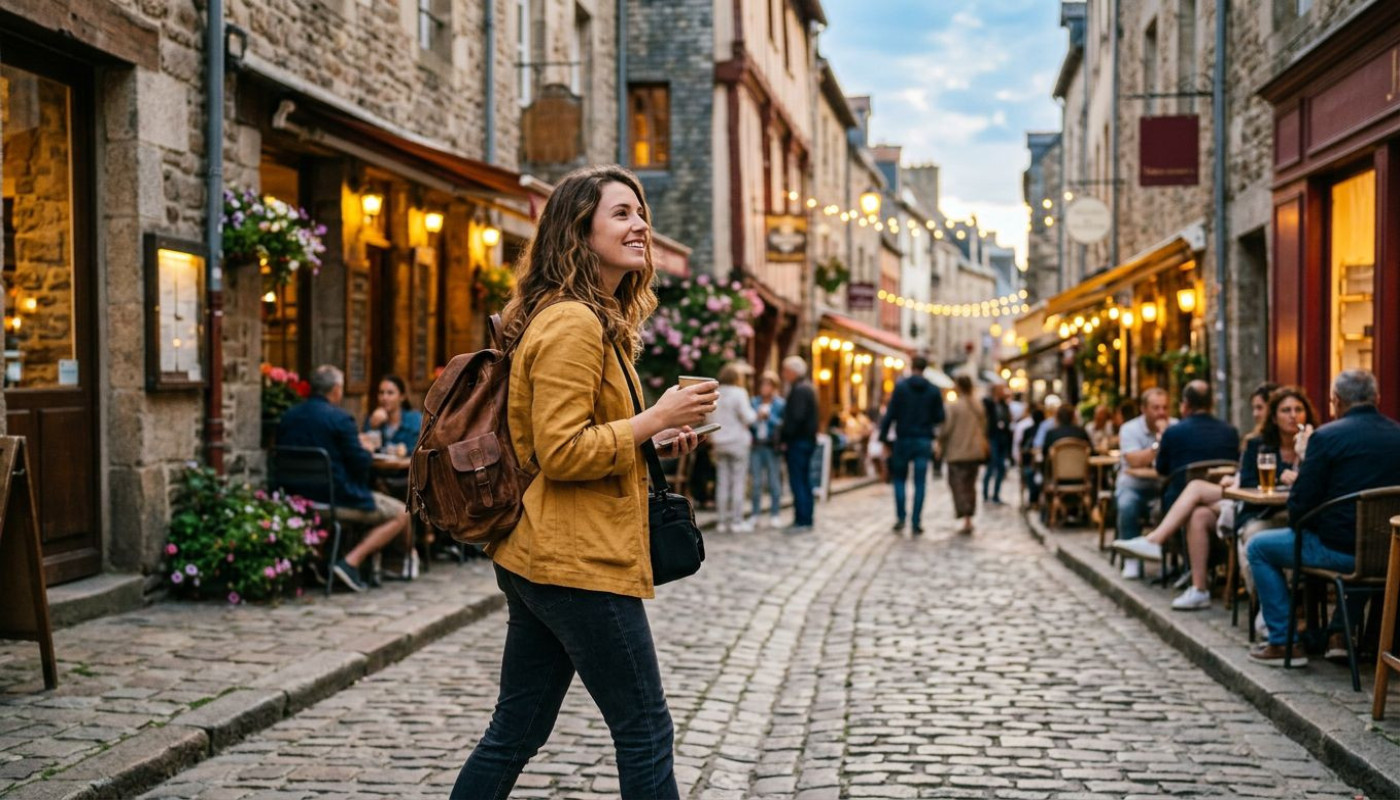
Who said the night belongs to capitals? Across Europe and parts of Asia, secondary cities are drawing visitors precisely because they feel lived-in, not staged, and because evenings still revolve around local habits rather than tourist schedules. Airlines and rail operators have helped, too: low-cost carriers expanded routes between regional airports throughout the 2010s, and high-speed rail keeps squeezing journey times on key corridors, which means travellers can base themselves in one place and roam widely, without paying capital-city prices.
Take Portugal’s Porto, long overshadowed by Lisbon in international marketing, yet now firmly established as a weekend magnet thanks to its riverside dining, wine cellars in Vila Nova de Gaia and an easy escape to the Douro Valley. In Spain, Valencia has ridden a similar wave, blending beaches and bold modern architecture with a food scene centred on paella’s home turf, and offering a calmer alternative to Madrid or Barcelona. In France, Marseille’s reinvention has been incremental rather than glossy, driven by culture, sea air and a dining scene that mixes North African influence with Provençal staples, while Lille has used its cross-border position to stay buzzy year-round, and to benefit from fast links to Paris, Brussels and London.
Outside Europe, the pattern repeats: Osaka’s street-food culture and late-night neighbourhoods keep gaining ground for travellers who want Japan’s energy without Tokyo’s intensity, and Vietnam’s Da Nang has become a beach-and-city hybrid that works for both quick stays and longer remote-work breaks. The appeal is not only “authenticity”, a word travellers often overuse, but practical math: accommodation costs tend to be lower, restaurant bills lighter and the experience less compressed into a single checklist weekend.
Nature escapes are turning mainstream
The outdoors is no longer a niche. Since 2020, national parks, coastal paths and mountain towns have seen sustained demand, and the trend has matured into something more structured: travellers plan around shoulder seasons, public-transport access and experiences that combine scenery with comfort, such as spa towns, cabin stays and guided multi-day hikes. Even in destinations known for cities, tourism boards now push green belts and nearby wilderness as core products, not optional day trips.
Hard data backs the shift. In the United States, the National Park Service recorded 325.5 million recreation visits in 2023, one of the highest totals in its history, illustrating how “park holidays” have become a default option rather than a specialist pursuit. In Europe, long-distance hiking routes and coastal trails continue to professionalise, with more luggage-transfer services, clearer signage and accommodation networks that make multi-day walking feasible for people who do not identify as hikers. Meanwhile, rail travel’s comeback has made it easier to reach smaller gateways to nature, and to avoid the friction of car rental in peak months.
What changes the traveller’s map is how these landscapes are being packaged, and by whom. Local operators increasingly offer modular itineraries, one valley or island at a time, and travellers stitch them together, mixing activity with recovery. Think a morning kayak, an afternoon café and a slow dinner rather than dawn-to-dusk sightseeing. Add the climate factor, and the calculus shifts further: heatwaves in traditional summer hotspots have pushed some travellers north, inland or into higher elevations, while others pivot to spring and autumn, when trails are quieter and temperatures kinder.
Islands are back, but not the obvious ones
Paradise, minus the crowds? That promise sells, but the island trend is evolving beyond the familiar posters. Rather than defaulting to the same few Mediterranean or Indian Ocean staples, travellers are hunting for places that still feel like discoveries, and they are paying closer attention to entry rules, flight connections and how far their budget will stretch once they arrive. The result is a broader island shortlist, mixing near and far, and rewarding those who plan creatively.
In the Atlantic, the Azores have built a reputation for whale watching, crater lakes and geothermal bathing, while Madeira continues to pull walkers and food travellers who want ocean views with a city base in Funchal. In the Mediterranean, quieter Greek islands have benefited from ferry networks that allow “island-hopping” without needing a new flight each time, and parts of Croatia and Turkey have drawn visitors looking for beaches with fewer peak-season bottlenecks. Further afield, islands in Southeast Asia that once sat in the shadow of Bali or Phuket are gaining traction, often because they deliver similar scenery with different pacing, and because online recommendations now spread faster than official campaigns ever could.
Entry conditions matter more than many travellers admit. Visa policy, passport strength and onward travel rules can decide where people go, especially for digital nomads and long-stay visitors who want flexibility. That is why countries with clear, accessible travel frameworks are showing up more often on planning lists, and why information about mobility has become part of destination appeal. For travellers tracking these shifts in real time, TravelTweaks highlights one of the most striking examples in the Pacific: Vanuatu, an island nation that sits far from the usual circuit yet speaks directly to a modern concern, namely how easily you can move beyond your first landing.
How travellers spot tomorrow’s hotspots
Forget the glossy brochure; follow the signals. The new traveller’s map is increasingly shaped by a mix of hard indicators and soft buzz, and the people who consistently find emerging hotspots tend to look for the same clues. Flight routes are a major one: when airlines add seasonal capacity, reopen dormant connections or expand low-cost options, it often precedes a surge in attention. Rail investments, too, can rewire a region, because a reliable two-hour train ride can turn an “unknown” town into an easy extension, and give travellers permission to experiment.
Prices tell their own story. When accommodation in a major city climbs sharply, travellers begin searching within a two- to four-hour radius for alternatives, and those nearby places can become destinations in their own right. The pattern is visible around large hubs worldwide, where day-trip towns evolve into overnight stays, then into multi-night itineraries. Social media accelerates it, but the deeper driver is value, and the sense of gaining space, both literal and psychological. People also track seasonality more carefully: a destination that is overcrowded for eight weeks may be close to perfect for the rest of the year, and experienced travellers increasingly book around school holidays rather than into them.
Finally, there is the question travellers now ask more openly: can this place cope? Water shortages, wildfire risk, extreme heat and overtourism have become part of trip planning, not just headlines. Destinations that communicate clearly about visitor management, public transport and off-peak options often earn trust, and trust converts into bookings. Tomorrow’s hotspots will not only be beautiful; they will be legible, navigable and resilient, offering a sense of discovery without the friction that turns a dream trip into a logistical grind.
Plan it like a pro, not a gambler
Book early where it matters, and stay flexible where it helps. If flights or signature stays define your trip, lock them in first; then build the rest around rail passes, refundable options and neighbourhood choices that keep you close to what you actually want to do.
Set a realistic budget, and leave room for local transport and meals, because “cheap flights” rarely tell the full cost story. Check whether your destination offers regional passes, museum bundles or public-transit discounts; if you are eligible for any youth, student or resident-style schemes, apply before you arrive, and you will spend less while seeing more.
On the same subject

What are the criteria for choosing a rucksack ?

Online casinos: what makes them so popular ?

Playing the Aviator game: what are the advantages ?

Three tips for choosing a clinical trial

Rome: Amazing Ancient Sites to Visit

Why choose a luxury hotel ?

Why estimate the price of your home?

Chengdu, the cultural capital of Southwest China

4 things to know about Adrien Cheng

Setting up a business in Hong Kong: what are the benefits

Between MailPoet and Sendinblue which one to choose for your Newsletter ?

Some Reasons Why Humans Are Attracted to Dinosaurs

Following the news on the internet: what are the advantages and disadvantages?

Some tips for changing your computer battery

How to protect yourself from computer intrusions?

How does voice-controlled home automation work ?

What are the steps to become a private taxi driver

What is off-site SEO?

The fastest WordPress themes in 2022

How to be well informed to succeed?

What can I do to stay focused throughout the day?

How to organise a party well?

Tips for deactivating a house alarm

What type of terrace should you choose for your house?
